
The Role of the Facilitator in Non-Formal Educational Experiences
Creating spaces for participation, inclusion, and meaningful learning
Introduction
Learning does not happen only in classrooms. Some of the most impactful educational experiences take place during youth exchanges, workshops, volunteering projects, community initiatives, and international mobility programmes. These are examples of non-formal education: learning environments based on participation, experience, and interaction.
In these contexts, facilitators play a central role. Unlike traditional teachers, facilitators do not simply provide knowledge. Their role is to guide the learning process, support group dynamics, and create spaces where participants feel comfortable expressing themselves and learning from each other.
The role of the facilitator
A facilitator helps transform activities into meaningful learning experiences. This means encouraging participation, listening actively, adapting methods to the needs of the group, and creating an inclusive atmosphere where everyone feels valued.
Non-formal education is participant-centred. Learning often happens through games, discussions, teamwork, reflection, and real-life experiences. Because of this, facilitators need strong communication and interpersonal skills. They must be able to manage group energy, support collaboration, and respond flexibly when situations change.
One of the most important responsibilities of a facilitator is ensuring inclusion. Participants may come from different cultural, linguistic, and social backgrounds, and they may also have different learning styles or abilities. A good facilitator recognises these differences as a resource and creates activities that allow everyone to contribute in their own way.
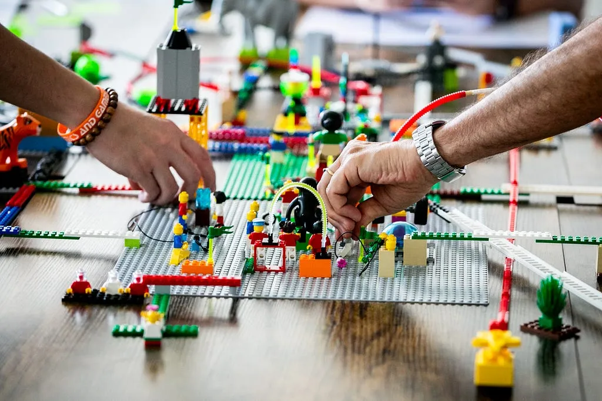
A practical example of facilitation methodology is LEGO® Serious Play®. In this activity, participants use LEGO bricks to build models that represent ideas, emotions, challenges, or solutions connected to a topic. Instead of simply discussing concepts verbally, participants communicate through storytelling and visual creation. The facilitator guides the process by asking questions, encouraging reflection, and ensuring that every participant has the opportunity to share their perspective. This method is particularly effective in non-formal education because it promotes creativity, equal participation, active listening, and collaborative problem-solving.
Facilitators are also essential in helping participants reflect on their experiences. Reflection is what turns an activity into a learning opportunity. Through feedback sessions, group discussions, or creative exercises, participants can better understand what they learned and how they can apply it in everyday life.
According to the SALTO-YOUTH competence model, facilitators and trainers in non-formal education combine knowledge, attitudes, and competences that support participation, personal development, and active citizenship. Their role is educational, but also social and emotional.
Conclusion
Today, non-formal education has an important role in promoting lifelong learning, inclusion, and democratic participation. In this process, facilitators act as guides who help people connect, collaborate, and learn from experience.
Rather than teaching from above, facilitators create opportunities for shared learning. Their work helps participants develop confidence, critical thinking, empathy, and a stronger sense of community. For this reason, facilitation is not only a method of education, but also a powerful tool for social change.
References
Cocoon Projects. Il potere dei giochi seri: alla scoperta di LEGO® Serious Play®.
https://cocoon-pro.com/plus/il-potere-dei-giochi-seri-alla-scoperta-di-lego-serious-play/
Ganiyu, I.O., Plotka, G., Seuwou, P. et al. Examining the use of LEGO Serious Play to enhance postgraduate research capacity. Humanit Soc Sci Commun 12, 223 (2025). https://doi.org/10.1057/s41599-024-03930-5
Prabhakara, S. (2023). Non-Formal Education, Community Based Learning, and Informal Education for Sustainable Development. In T. Gupta & K. Khatreja (Eds.), Sustainable Development and Quality Education (pp. 96–110). EZ Education.
SALTO-YOUTH Training and Cooperation Resource Centre. Competence Model for Trainers Working at International Level.