
Your planet, your choice: how to spot greenwashing before it tricks you?
Have you ever bought a product labelled “eco-friendly” or “green” and then wondered whether that claim was actually true? Greenwashing, the practice of making misleading or unsubstantiated environmental claims, has become one of the defining challenges of the green economy. As young people increasingly drive demand for sustainable products and businesses, knowing how to tell genuine sustainability apart from clever marketing is a crucial skill. This is exactly the kind of critical thinking that ERGE (Escape Rooms for Green Entrepreneurship) seeks to build: by immersing young learners in real-world sustainable business challenges through game-based learning, ERGE equips future entrepreneurs to navigate, and help clean up, a market full of greenwashing.
What Is Greenwashing?
Greenwashing refers to “the act of misleading consumers regarding the environmental practices of a company or the environmental benefits of a product or service” (Parguel et al., 2011 as cited in Yang et al., 2020). In other words, it is what happens when a company’s green image does not match its actual environmental performance. The term was coined back in 1986 and has grown significantly in relevance as consumer demand for sustainability has surged. Today, the scale of the problem is striking: according to the European Commission, 53% of green claims in the EU provide vague, misleading or unfounded information, and 40% have no supporting evidence whatsoever (European Commission, 2026). Meanwhile, a 2020 UK review found that 40% of green claims online could be misleading to consumers (Peck, 2025).
Greenwashing can take many forms. Researchers have identified several distinct types (Yang et al., 2020), including:
- Selective disclosure means sharing only the positive environmental data while hiding the negatives. Think of an airline proudly announcing a new fleet of “fuel-efficient” planes without mentioning that it is simultaneously expanding its routes and increasing total emissions.
- Decoupling happens when a company makes ambitious sustainability commitments but takes no real action to back them up. A fast fashion brand pledging to be “carbon neutral by 2040” while continuing to overproduce millions of garments every season is a textbook example.
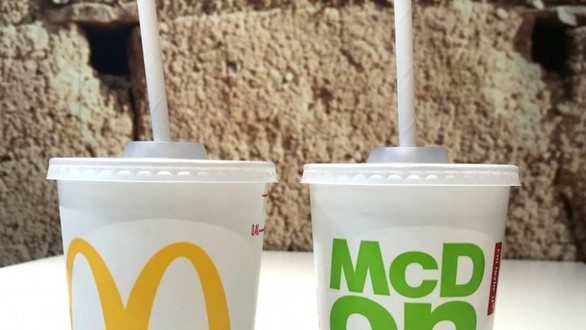
- Attention deflection means spotlighting one green feature to distract from harmful practices elsewhere. McDonald’s switch from plastic to paper straws in 2019 is a well-known case: the gesture grabbed headlines, but the straws turned out to be non-recyclable and the core business remained unchanged.
- Deceptive manipulation involves using sustainability language and imagery to create a false impression of environmental commitment. This is the company wrapping its product in green packaging covered in leaves and nature imagery, with no evidence that anything about the product or its production is actually sustainable.
Beyond these, more recent patterns have been documented: greenlighting (spotlighting one green product while ignoring wider damaging practices), greenshifting (blaming consumers rather than the company), and even greenrinsing (constantly updating ESG targets before achieving them to avoid accountability) (Peck, 2025).
How to spot greenwashing
Becoming a more informed consumer, or a more responsible entrepreneur, starts with learning to recognise the warning signs. Here are four practical techniques:
- Watch out for vague or feel-good language. Words like “natural”, “eco-friendly”, “clean” or “sustainable” sound reassuring but mean nothing without specifics. If a company cannot tell you exactly how their product is greener, how much carbon has been saved, or what concrete steps they have taken, treat the claim with scepticism. Ask: compared to what? Measured how? Since when? Vague and unverifiable claims are one of the most commonly documented forms of greenwashing (Yang et al., 2020; Peck, 2025).
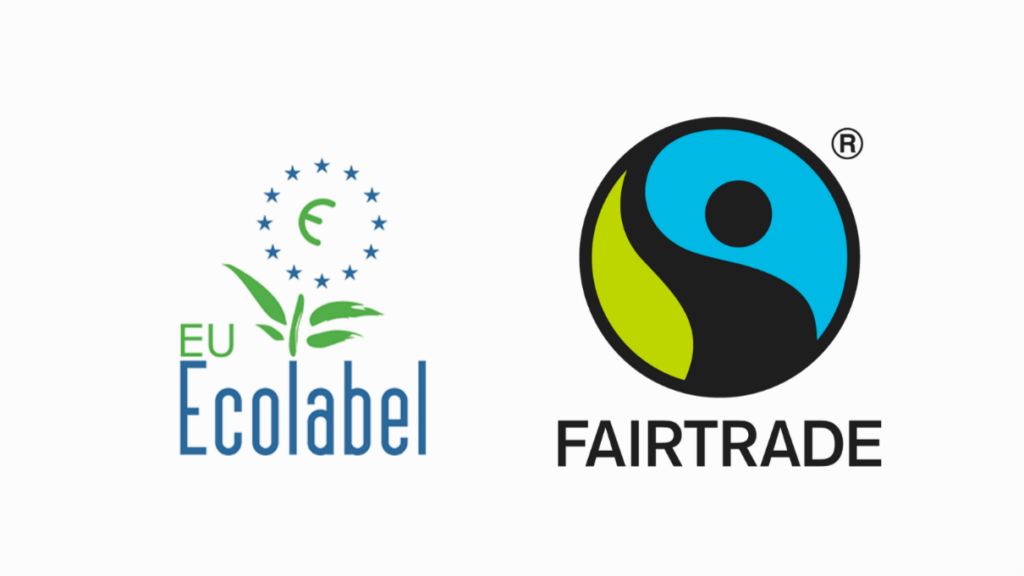
- Check certifications and labels carefully. Not all eco-labels carry the same weight. The EU currently counts over 230 sustainability labels and 100 green energy labels, with very different levels of transparency and rigour (European Commission, 2026). Some are self-declared; others are independently verified. Look for certifications that are issued or recognised by public authorities or credible third-party bodies. For example, the is an official EU scheme with strict, science-based and independently verified criteria covering the full lifecycle of a product, from production to disposal. You can learn more about the EU Ecolabel, by watching this video: “What is the EU Ecolabel?”
Similarly, the Fairtrade label guarantees that products meet rigorous social, environmental and economic standards, verified by an independent body (Fairtrade International).
Both are reliable reference points when navigating the supermarket shelf or an online store. Conversely, a company-created badge with no external audit is a red flag. This is why the EU is now moving to ban sustainability labels that are not based on approved certification schemes (European Parliament, 2024).
- Look for transparent data and verifiable evidence. Trustworthy companies back their claims with measurable, specific and publicly available data. Statements like “our CO₂ emissions linked to this product have halved compared to 2020” are more credible than “we care about the planet” because they can be verified (European Commission, 2026). Look for sustainability reports that include both positive and negative data, not just the highlights. Research shows that companies with genuinely strong environmental records tend to disclose more complete information, while those with weaker performance often engage in selective disclosure to manage their image (Yang et al., 2020).
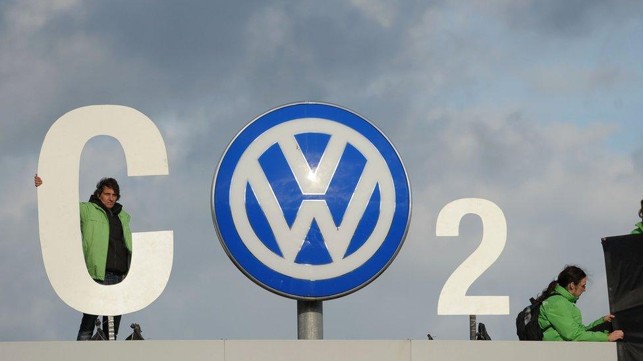
- Compare the message with the whole picture. A company might genuinely use recycled packaging while continuing to rely on polluting manufacturing processes. Always zoom out and ask: does this one green initiative reflect the company’s overall direction, or is it designed to distract? Cross-referencing marketing messages with news coverage, NGO reports, or regulatory findings can reveal a gap between image and reality. Notorious cases like the Volkswagen emissions scandal, where the company falsified emissions data while promoting its vehicles as environmentally friendly, demonstrate how extreme this gap can be (Peck, 2025; Yang et al., 2020; Hotten, 2015).
Why this matters for Green Entrepreneurs
Greenwashing does not just mislead consumers: it actively harms society. When companies profit from fake green claims, they crowd out genuinely sustainable businesses, erode consumer trust in green products across entire industries, and slow down the transition to a real green economy (Yang et al., 2020). For young people building or dreaming of sustainable businesses, this context matters enormously. Authenticity is not just an ethical choice, it is increasingly a legal and commercial imperative. The EU’s new Green Claims Directive requires companies to substantiate environmental claims using robust, science-based and verifiable methods before using them in marketing, with independent verification as a prerequisite (European Parliament, 2024; European Commission, 2026).
The ERGE project places exactly these kinds of real-world dilemmas at the heart of its escape game scenarios. Learning to think critically about environmental claims, to distinguish greenwashing from genuine sustainability, and to build businesses that can stand up to scrutiny: these are not just academic skills. They are the foundations of green entrepreneurship done right.
References
European Commission. (2026, May 12). Green claims. Environment. https://environment.ec.europa.eu/topics/circular-economy-topics/green-claims_en
EU Ecolabel – Home. (2026, April 21). Environment. https://environment.ec.europa.eu/topics/circular-economy-topics/eu-ecolabel_en
European Parliament. (2024). Fermare il greenwashing: come l’UE regola le asserzioni ambientali. https://www.europarl.europa.eu/topics/it/article/20240111STO16722/fermare-il-greenwashing-come-l-ue-regola-le-asserzioni-ambientali
Hotten, R. (2015, December 10). Volkswagen: The scandal explained. BBC News. https://www.bbc.com/news/business-34324772
How does the label work. (n.d.). Fairtrade.net. https://www.fairtrade.net/en/why-fairtrade/how-we-do-it/how-does-the-label-work.html
Peck, H. (2025, February 7). What is greenwashing (and how can you spot it)? University of the Built Environment. https://www.ube.ac.uk/whats-happening/articles/greenwashing/
Yang, Z., Nguyen, T. T. H., Nguyen, H. N., Nguyen, T. T. N., & Cao, T. T. (2020). Greenwashing behaviours: causes, taxonomy and consequences based on a systematic literature review. Journal of Business Economics and Management, 21(5), 1486–1507. https://doi.org/10.3846/jbem.2020.13225
BBC News. (2016, January 17). Volkswagen “among most criticised companies by NGOs.” https://www.bbc.com/news/business-35337891