
From planetary boundaries to Donuts Economics! | |
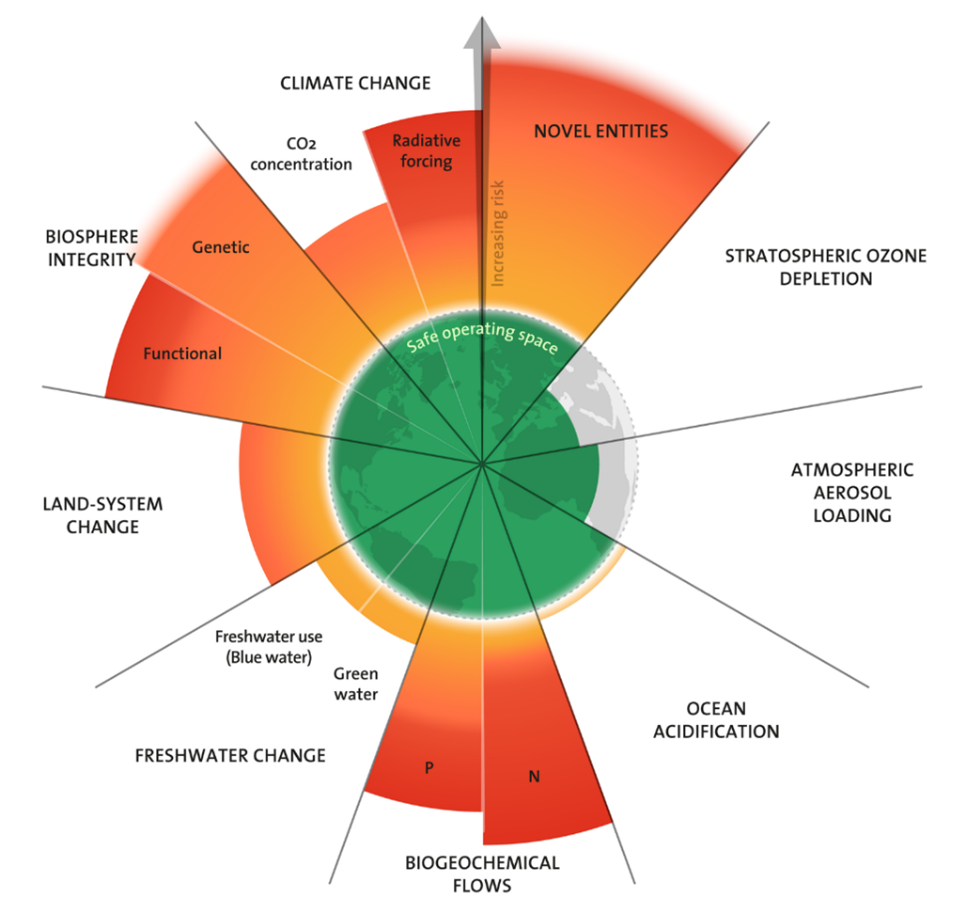
In 2009, “Nature” published a report on planetary boundaries by an international team of twenty-six researchers, including Johan Rockström and Will Steffen. They identified nine planetary boundaries—thresholds that humanity must not cross to preserve the favorable conditions that have allowed our development and to ensure we can continue living sustainably within a safe and stable ecosystem. In other words, these boundaries help prevent sudden and unpredictable changes to the Earth’s environment. Over the years, the planetary boundaries framework has generated enormous interest. Centre researchers develop and use the framework within science, policy, and practice. Since 2009, the nine dimensions of the planetary boundaries framework has been updated and its last illustrated version can be found in the diagram opposite. |
The evolution of the planetary boundaries framework. Licenced under CC BY-NC-ND 3.0 (Credit: Azote for Stockholm Resilience Centre, Stockholm University. Based on Sakschewski and Caesar et al. 2025, Richardson et al. 2023, Steffen et al. 2015, and Rockström et al. 2009). |
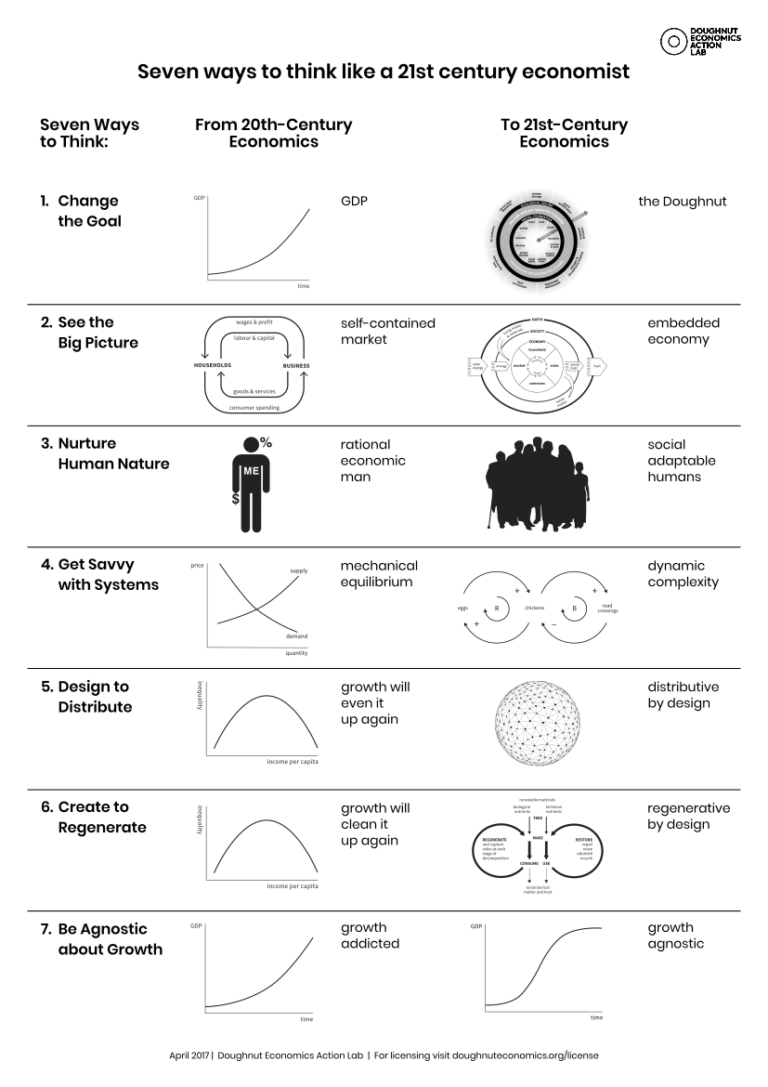
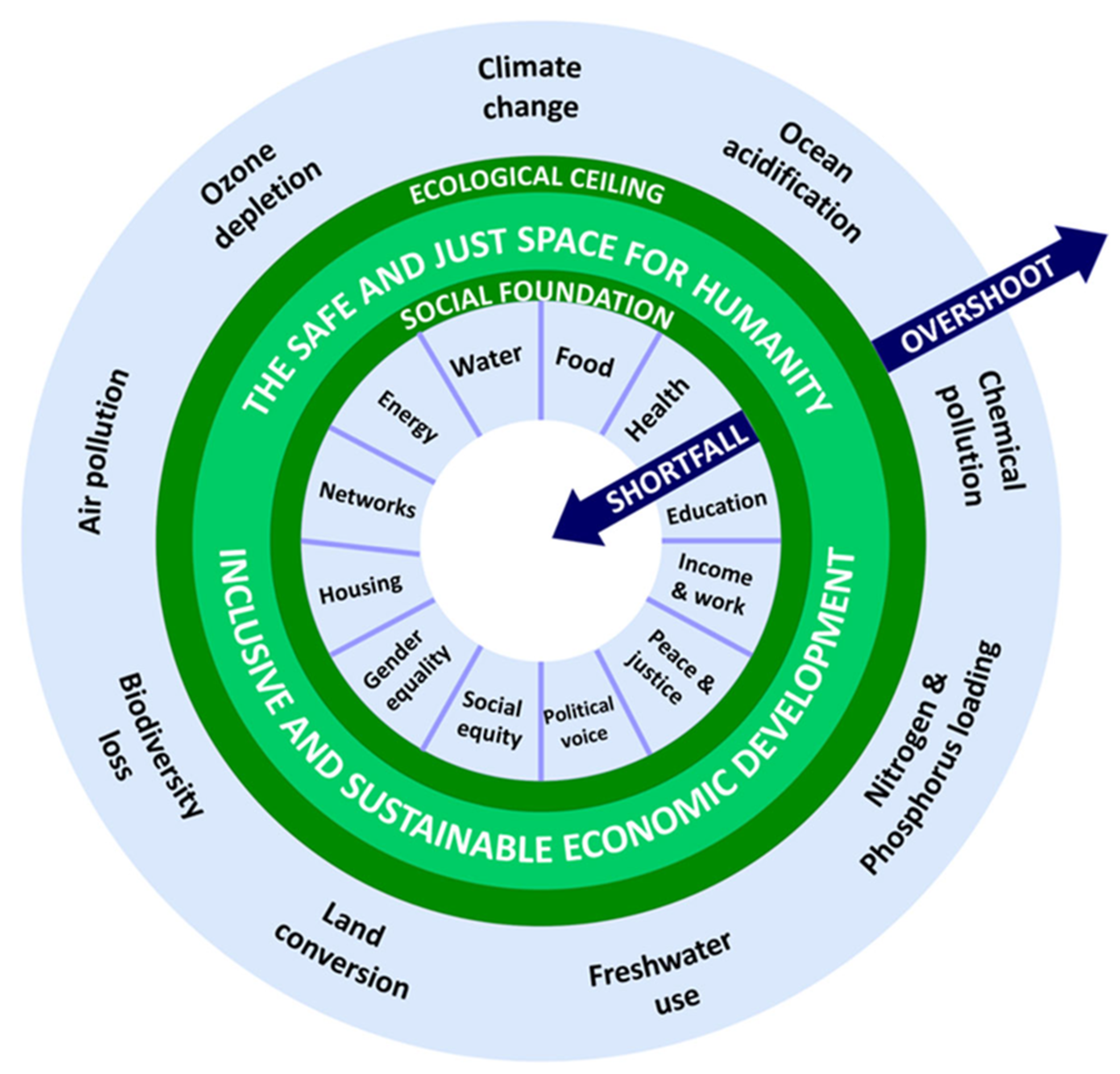
In 2012, the economist Kate Raworth proposed complementing the outer, natural planetary boundaries (“ecological ceilings”) identified in 2009 by Rockström and his team with inner boundaries (“social foundations”), representing the essential human needs for a good life. She outlined 12 distinct dimensions or necessities, forming the “social foundation”: gender equality, water, peace and justice, education, political voice, food, income and work, energy, housing, health, social equity, and networks. | |
Planetary boundaries and human well-being can be illustrated through a ring, creating a powerful framework for understanding the relationship between environmental health and human needs. This model captures the full complexity of today’s challenges, highlighting the many interconnected dimensions we must confront. It defines two critical limits: a social foundation that must be secured to ensure a dignified quality of life for ALL, and an ecological ceiling that must not be crossed if we are to preserve a stable planet. The ambition is for human economic activity to operate within this safe and just space. This implies meeting essential social needs such as education, health, and access to food, while remaining within the Earth’s ecological limits. Yet it is important to remember that this framework is a theoretical model, not a ready-made solution. | This raises a crucial question: does a viable space truly exist between the social foundation and the ecological ceiling, and if so, what concrete actions and pathways could allow us to inhabit it sustainably?
Doughnut for Sustainability framework, adapted from Capmourteres et al. (September 2019), “A Complex Systems Framework for the Sustainability Doughnut.” |
BUT, how has this model actually been implemented in practice? |
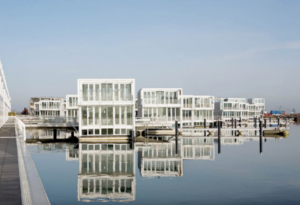
Across the world, numerous movements, organizations, and cities are experimenting with how to apply Donut Economics to their own realities. Through the Donut Economics Action Lab (DEAL) platform, this collective energy is visible and open to participation. A major milestone came in April 2020, when Amsterdam became the first city in the world to formally adopt the Donut framework in its public policy decisions, integrating social justice and ecological transition into its economic recovery plan. In the housing sector, for instance, the city has prioritized the construction of affordable, low-pollution homes by embracing circular economy principles and low-carbon materials. They want to continue designing the city in a climate-adaptive way, aiming to provide residents with cleaner air and to mitigate the impacts of climate change, such as rising temperatures and increased rainfall
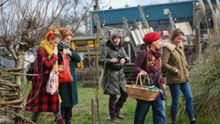
Amsterdam has also launched computer recycling programs, redistributing refurbished devices to low-income residents, while individual gardens and collective urban farming projects are flourishing across the city.
Image from Noordoogst Brussels is also part of this growing international movement, through the Brussels Donut project, which seeks to adapt Donut theory to the concrete realities of the Belgian capital. For example, in 2023, the regional government introduced criteria for businesses to receive support, focusing on environmental and social responsibility. |