
Inclusion and Accessibility in Game-Based Learning
Game-based learning is becoming an important tool for helping young people understand and engage with green entrepreneurship. Games make learning active, playful, and hands-on. But to make this approach meaningful, it must also be inclusive and accessible. If a game only works for some learners, then its impact becomes limited. True learning happens when everyone can join in, participate, and feel confident.
In the ERGE project, we work with young people from different backgrounds, languages, and learning experiences. Some learn best through visuals, some through movement, others through discussion or experimentation. Game-based learning allows all these styles to exist side by side — but only if games are designed with accessibility in mind. This means thinking about how the game feels for someone with reading difficulties, attention challenges, low digital skills, or limited experience with entrepreneurship.
Accessibility starts with clarity. Simple instructions, short steps, and clean layouts make it easier for all learners to follow along. Using symbols, colours, or examples can reduce stress and make the game more intuitive. When information is presented in different formats — spoken, written, or shown — more learners can understand it. This also makes the learning environment safer, because participants do not have to worry about “doing it wrong”.
Inclusive games also offer different ways to succeed. Instead of one correct answer, there can be several paths or strategies. This helps learners experiment and build confidence. Cooperative game mechanics are especially effective. When players must collaborate to solve a problem, they naturally support one another. This creates a sense of belonging and reduces the pressure to perform. For many young people, this shared journey leads to deeper learning.
Another important part of inclusion is pacing. Not all learners work at the same speed. Games that allow time for thinking, repeating, or exploring help everyone stay engaged. Some learners benefit from short breaks or smaller tasks, while others feel motivated by quick challenges. A flexible game design makes space for both.
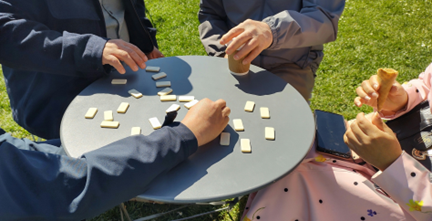
Representation also matters. When characters, stories, or scenarios reflect different cultures, abilities, and experiences, learners feel seen. A game about green entrepreneurship becomes more meaningful when it includes diverse examples of climate challenges, community needs, or business ideas. This helps young people understand that sustainable innovation is not limited to one place or one type of person — it is relevant everywhere.
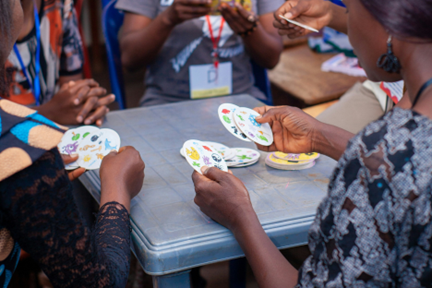
By combining inclusion and game-based learning, we create educational spaces where more young people can discover their strengths. They learn to collaborate, communicate, and think in systems. They gain the confidence to explore new ideas and imagine their role in the green transition. This is at the heart of the ERGE project: supporting young people in building the mindset and skills needed for a sustainable future.
As we continue developing tools and activities, we keep one question in mind: How can we make learning accessible for everyone? When this becomes the starting point, game-based learning becomes more than a method — it becomes a bridge between young people, creativity, and the world they want to change.
References:
UNESCO (2021). Inclusive Learning: Ensuring Access for All Learners. https://www.unesco.org/en/inclusion-education
Universal Design for Learning (UDL). CAST (2022). UDL Guidelines. https://udlguidelines.cast.org/
European Commission (2020). Education and Training: Inclusive Education Policies. https://ec.europa.eu/commission/presscorner/detail/en/ip_15_5568
Inclusive Gaming (Inclusivity Now – CMC 2021)
https://www.youtube.com/watch?v=AUpv-MgTRHU